Roseanne Orozco
Day of the DeadRoseanne Orozco was the younger daughter of Emma and Henry Orozco, a quiet child whose sudden, lifelong silence followed a distressing first day at school. At fifteen, she vanished from a hospital after treatment and was later found murdered in a cooler along a highway. Her story becomes both a personal loss that her family could never put behind them and a case shaped by ignored testimony, missing records, and a failure of investigation on Native land.
Identity and Family
Emma and Henry had two daughters. Their older child, Andrea, was affectionately called Kitten; Roseanne, the shy younger one, was given a Tohono O’odham name meaning Beloved. Andrea’s recollections make clear that the sisters were close: when Roseanne cried at the prospect of being left with their grandmother while Andrea went to school, Andrea found a way to take her along.
Roseanne’s family continued to care for her after she stopped speaking. Emma said that her parents sought help from Indian Health Service doctors and a medicine man, but none of them could help. Doctors found no physical explanation for Roseanne’s silence. Her father nevertheless required her to attend school, where she did not answer questions or turn in papers. These details distinguish her silence from a simple absence of speech: it became the condition through which her family, teachers, and investigators understood—and often misread—her.
Silence After School
Andrea connected Roseanne’s mutism to the sisters’ first day at school. Roseanne became frightened when she learned that she could not remain in Andrea’s class. After a large male principal removed her from the classroom and isolated her, Andrea did not see her again until the end of the school day. On the bus home, Roseanne would not answer Andrea’s questions. She never spoke again—not to Andrea, her parents, or anyone at school.
Andrea later understood the incident as a turning point and believed Roseanne had been traumatized. Yet the explanation was not recognized by the adults and institutions that might have investigated it. Doctors could find nothing physically wrong, and the medicine man reportedly concluded that Roseanne was developmentally disabled. The novel does not give Roseanne a spoken account of what happened; her experience reaches the reader through the people who tried, with varying degrees of success, to interpret her silence. Andrea’s memory supplies a possible cause, but it also records the limits imposed on a child witness whose account was not treated as important.
Hospital Disappearance and Murder
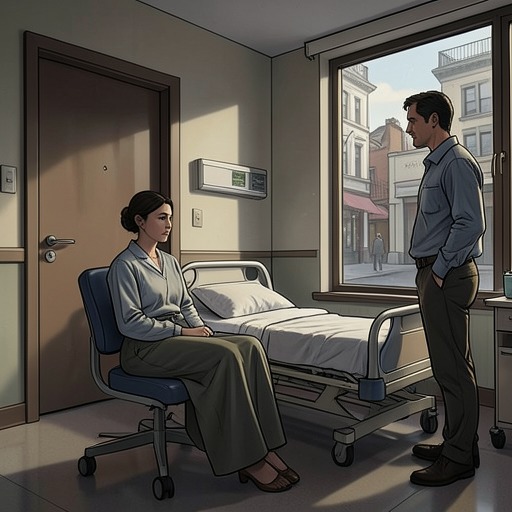
In 1970, at fifteen, Roseanne was hospitalized after an appendectomy and later returned for tests because she remained unwell. She was found to be pregnant. Her family did not know of a boyfriend, and the pregnancy immediately fed suspicion that a relative might be responsible. A blood test eventually excluded Henry as the father of the fetus, but it did not identify the father or solve the murder.
After Roseanne was released from the hospital, Henry was expected to collect her after work. When he arrived, she was gone. People assumed that she had left on her own, and the family never saw her again. The following week, someone found her dismembered body in a Coleman cooler along the highway near Quijotoa. Highway workers collecting trash on Highway 86 west of Sells discovered the remains. The case became known as the Girl in the Box, a name that entered local memory even as the investigation itself faded.
The circumstances of Roseanne’s pregnancy and disappearance pointed toward the hospital, but the possibility that someone there had taken her was not pursued effectively. Andrea said she had tried to tell the Papago Tribal Police that the hospital was relevant. She was sixteen, and no one was interested in her opinion. She could only speculate about who might have been involved, mentioning hospital staff or a visitor; the available evidence did not establish which person removed Roseanne from the hospital.
A Case Left Dormant
The investigation’s institutional setting mattered. Roseanne’s presumed murder site was on the reservation, and investigators assumed she had been killed by another Native person. Responsibility therefore fell to federal authorities or local tribal police, rather than to the Pima County Sheriff’s Department, which had jurisdiction in the separate case of Gina Antone, murdered off the reservation by Anglos. The Papago Tribal Police Force handled Roseanne’s case, while the county’s role was secondary.
The old file was thin. It recorded the discovery of Roseanne’s remains, her pregnancy, and the initial suspicion of Henry. Once the blood test excluded him as the fetus’s father, he was also dropped as an official murder suspect. Within weeks, new entries stopped. The investigation went dormant without identifying another suspect. The text places this outcome against the shortage of training, equipment, and money available to tribal police, and against the cursory attention often given to reservation murders. The failure was not simply that a clue was missed; the case lacked sustained investigative attention, while potential witnesses had little authority to make their knowledge count.
Years later, Emma told Brandon Walker that Roseanne had been murdered in 1970 and that her killer had never been caught. Henry had wanted the family to forget the past, but after his death Emma decided that, as Roseanne’s mother, she still had the right to know. Her determination required her to raise the subject with a stranger and to revisit a loss that remained painful more than thirty years later. Brandon recognized that discussing it ran against the restraint expected in her community; he answered her disclosure with silence rather than pressing her for more.
Renewed Investigation and Legacy
Andrea’s account sharpened the hospital lead. She said she had already tried to direct the original investigators there, but they did not listen. Emma later challenged the hospital’s claim that no admission record for Roseanne could be found: the records did contain Emma’s own three hospital admissions, including the births of both daughters. The contradiction reinforced the family’s conviction that Roseanne had been admitted and that the hospital held information the official account had failed to recover.
Emma’s persistence also became part of the investigation’s evidence. To obtain genetic material from Roseanne’s unnamed baby, she and family members had the child’s remains exhumed without waiting for tribal-council permission. The decision helped move the inquiry forward, but it compromised the chain of evidence and left Brandon, then working outside the police department, caught between obtaining answers for survivors and preserving evidence that could be used in court. At the cemetery, the baby’s small, unnamed cross stood between the headstones of Henry and Roseanne. Emma explained that the baby had been taken for an autopsy and was eventually returned so she could be buried with her mother.
The renewed inquiry ultimately connected Roseanne’s murder to Gayle and Larry Stryker. Brian Fellows confirmed that both were involved in her killing and in other crimes. Investigators’ DNA and fingerprint work linked the Strykers to fourteen cases, while Larry’s notebooks contained photographs of additional unidentified girls. The discovery transformed Roseanne’s case from an isolated, dormant homicide into part of a wider pattern of violence, without erasing the particular history of the family that had kept asking about her.
Roseanne’s significance lies partly in the contrast between how persistently she remained present to her family and how quickly she disappeared from public attention. Her mother kept seeking an answer; her sister remembered both the school-day rupture and the warning that investigators dismissed. The case’s eventual connection to the Strykers does not undo those years of silence or restore the testimony and records that were lost or discounted. It does, however, confirm that the family’s refusal to treat Roseanne’s disappearance as settled was essential to bringing the truth into view.